
Mascarenhas, Arun
Associate Professor and Discipline Coordinator: Communication Design
arun.idc [at] iitb.ac.in
Spring Semester (2026)
-
DE 126 - Sculptural Form
-
DE 202 - 2D Visual Studies II (Co-guided)
-
DE 614 - Design Workshop
-
DE 686 - Handmade Character Design (Dept. Elective)
Autumn Semester (2026)
-
DE 109 - Introduction to Design (HASMED, Co-guided)
-
DE 112 - Communication Through Illustrations
-
DE 619 - The Speaking Image (Associate Faculty)
Past courses
-
DE 103 - Image Representation and Transformations I
-
DE 104 - Image Representation and Transformations II
- DE 106 - Typography Fundamentals and Exploratory Printing (Guest: Workshop)
-
DE 108 - Exploration in Drawing, Tonalities, and Textures (Co-guided)
-
DE 109 - Introduction to Design (HASMED: Guest Lecture/Presentation)
-
DE 111 - Communication Through Sculptural Forms
-
DE 119 - Material Exploration (Co-guided)
-
DE 121 - Design Studio I - Problem Identification (Co-guided)
-
DE 122 - Design Studio II - Problem Analysis (Guest)
-
DE 125 - Drawing Tools, Lines, and Forms (Co-guided)
-
DE 132 - World of Images and Objects
-
DE 133 - Applied Science for Designers (Co-guided)
-
DE 135 - Design Studio I - (Co-guided)
-
DE 201 - 2D Visual Studies I - Word & Image (Co-guided)
-
DE 205 - Creative Thinking Process & Methods (Co-guided)
-
DE 207 - Understanding Space and Perspective (Co-guided)
-
DE 209 - Sculptural Ceramics (Guest)
-
DE 210 - Understanding Human Anatomy Elective (Co-guided)
-
DE 221 - Design Studio III-Creative Exploration (Co-guided)
-
DE 231 - Design Society Culture and Environment (Co-guided)
-
DE 633 - Colour, Composition, and Layout (Co-guided)
-
DE 651 - Sketching and Anatomy-1
-
DE 673 - Sketching for Interaction Design
-
DE 688 - Sketching for Communication Design (Guest)
Areas of interest and practice:
Pedagogical Interests:
My teaching philosophy is firmly rooted in critically acclaimed theoretical foundations that were advocated by thinkers like Rabidranath Tagore, John Dewey, and constructivist educators from Jean Piaget, Lev vygotsky, to Aubrey Papert have long understood: that knowledge is not transmitted but built brick-by-brick, coil-by-coil, and gesture-by-gesture, characterised by robust methodological principles, and enriched through practical experience. Nevertheless, I do not limit myself to a single pedagogical framework, as I believe an educator's essential role is to employ a diverse range of strategies to enhance learning, support student growth, and effectively implement the curriculum. I refer to this as integrated pedagogy, grounded in sustained and personal experiences.
In foundational teaching, I predominantly use Constructivist Pedagogy to encourage hands-on creation, enabling students to develop their own understanding of materials and processes rather than merely explaining them. At this stage of learning, I facilitate co-learning in small groups, which is vital. This approach enables learners to absorb the subtleties of creating and manipulating materials by observing and interacting with others. The tacit knowledge gained extends beyond theoretical explanations. It not only cultivates a spirit of collaborative learning, which is crucial in our complex world, but also aids individuals in addressing their weaknesses and offers a framework for improvement. I firmly believe that learning outcomes can be enhanced by considering students' needs, backgrounds, and interests.
Inquiry-based learning is another crucial component of my integrated pedagogy that benefits both early and advanced stages of learning. For each module/course I engage in, I develop a well-defined framework that outlines the learning context, processes, and expected outcomes, encouraging students to ask questions, explore primary sources for answers, and engage in reflection. This approach is supported by the strategic use of technology (technology-enhanced pedagogy), such as providing a common accessible link to a class folder with a personal folder space for customisation. Additionally, it involves a disciplined approach to organising and managing the learning process while observing and learning from others' processes and methods. It facilitates personalised learning experiences for students with diverse needs and promotes interactive pedagogy through peer-learning.
Additionally, an approach to Differentiated Instruction enables me to customise assignments to accommodate various learning paces and styles within a single classroom or project guided. My teaching modules and project guidance are structured with designated slots for lectures/discussions and feedback sessions. The module duration I employ for knowledge dissemination extends beyond mere instruction, encompassing how learning is influenced by social, political, and psychological contexts, to foster the intellectual, social, and emotional growth of the learner.
Key Words: Nurturing Creativity, Foundational Learning, Elements and Principles of Design, Drawing, Anatomy and Life/Nature Study, Visualisation and Representation Techniques, Image and Object Making Methods, Material Exploration, Experiential Learning, History of Arts, Visual Culture, Design Culture, Design Theory and Design Research methods, Teaching-Learning Approaches (Fine Arts/Design education).
Design and Research Interests:
-
Communication Design: Drawing, Illustrations, Image-based Expressions, Form-based Expressions, Visual Culture, Archives, Design Theory, Design Studies, Design Activism, History of Art, Crafts/Design,
-
Design focusing on Form and Usability: Design for Special Needs, Design/Material Culture, Methods and Techniques of Designing, Designerly way of Making, Material Thinking
-
Design for Childhood/Children: Images, Objects, Spaces, Educational Aids, Playthings, Picture Books, Teaching and Learning Aids and Approaches
-
Design for Handmade Ecologies: Craft Studies, Local/Natural Resources, Sustainable Practices, Artisanal Livelihood, Cluster Development, Regional Cultural Heritage, Conservation, and Documentation
-
Designing for Public Spaces: Contemporary Art/Design, Studio/Outdoor Sculptures and Murals, Assemblages and Installations, Public Memorial Conception, Monuments, and Restoration, Digital Conservation & Experience
-
Policy Studies: Design, Study, and Analysis of Public/Social Policies; Creativity Research, Creativity/Innovation in Education Policies, Creative Economy, Creative Cultural Industries, Design and Policy Consultancy
-
Qualitative Methods: Sketching, Visual Ethnography; Case-studies, Empirical Methods, Archival and Historical Research Methods, Text-based/Content Analysis, Design Research Methods, Articulation
Note for Prospective PhD Applicants
My PhD supervision follows a co-development model designed to ensure strong alignment and set candidates up for long-term academic success. Prior to formal admission, I work with potential candidates for several months to refine shared research interests, build a deep understanding of the research process, and aim for initial publication outputs. Only after establishing this groundwork do I formally propose the topic for a subsequent intake cycle.
Please note: This pre-admission collaboration does not guarantee admission. It serves as a mutual evaluation period that may culminate in a publication and valuable research experience, allowing both candidate and supervisor to make an informed commitment to a long-term PhD journey.
Preference: I strongly prioritise full-time scholars over part-time candidates (exceptions made only under extraordinary, well-justified circumstances). If our interests align, please feel free to reach out.
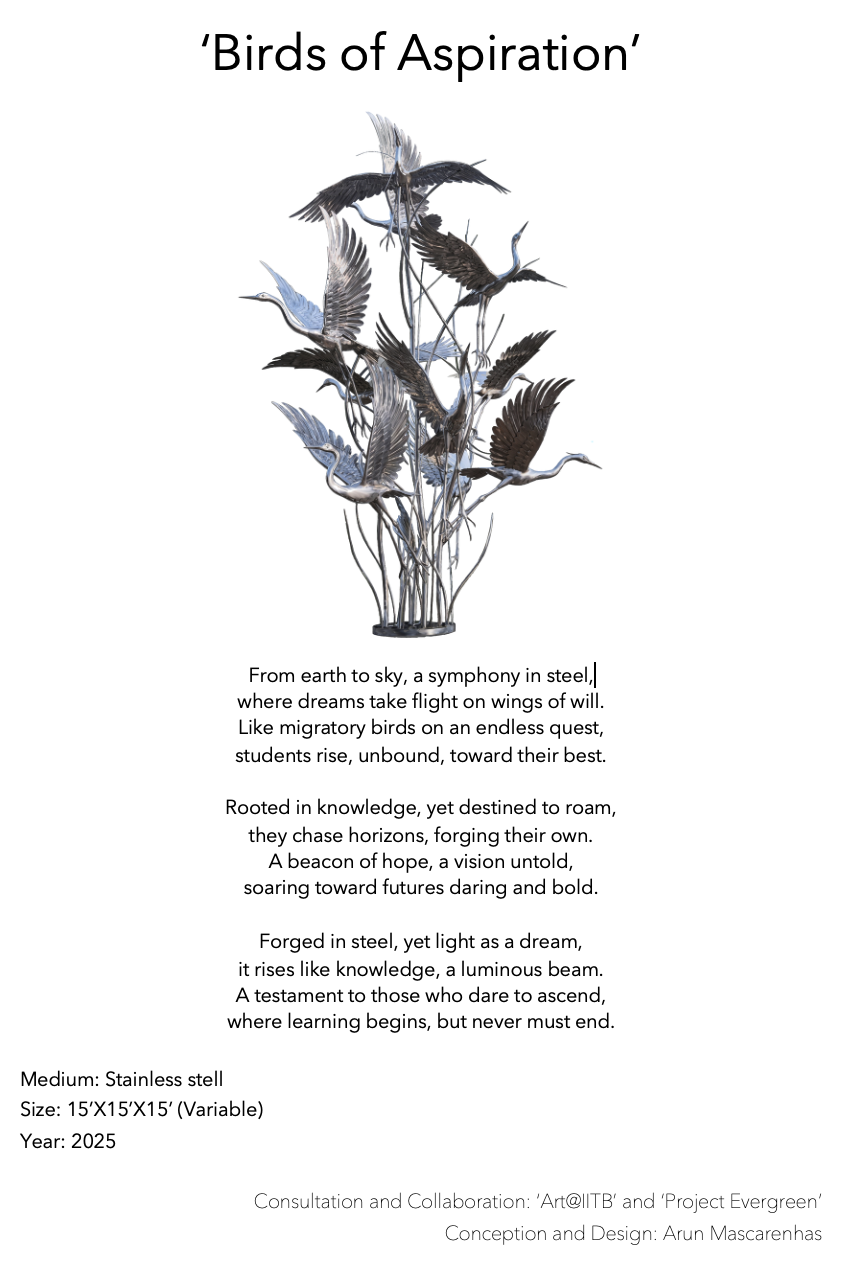
Professional Design Projects for Industry and Non-Industrial Designs (click image for details)
|
|
|
|
 |


Contact details:
# 203E, Design Office-1, 2nd Floor,
IDC School of Design, IIT Bombay,
Adi Shankaracharya Marg (JVLR),
Powai, Mumbai-400 076,
Maharashtra, India
Telephone:
091-022-2576 5299
091-022-2576 7801/ 7802
Email:
ORC-ID (Research)
Drawing and Illustration Initiatives at IDC School of Design
- Drawing Community (Print Making/Drawing Studio)
- GISC-IITB (Science Communication)
Print Making/Drawing Studio, Ground Floor, IDC Iconic Building, IIT Bombay